
The In-Between
Sometimes we find ourselves in the space between where we have been and where we are going next.
The in-between can be exciting. It can also be confusing, lonely, and a little mushy.
Sometimes the next best step is already there. We just need enough space, perspective, and encouragement to see it. You are not alone in this journey.

When the Operation Is Telling You Something
Growth, new technology, changing customer demands, or years of small workarounds can create friction that isn't visible in the reports.
Sometimes the operation doesn't need another answer.
It needs a different set of eyes and an experienced guide.
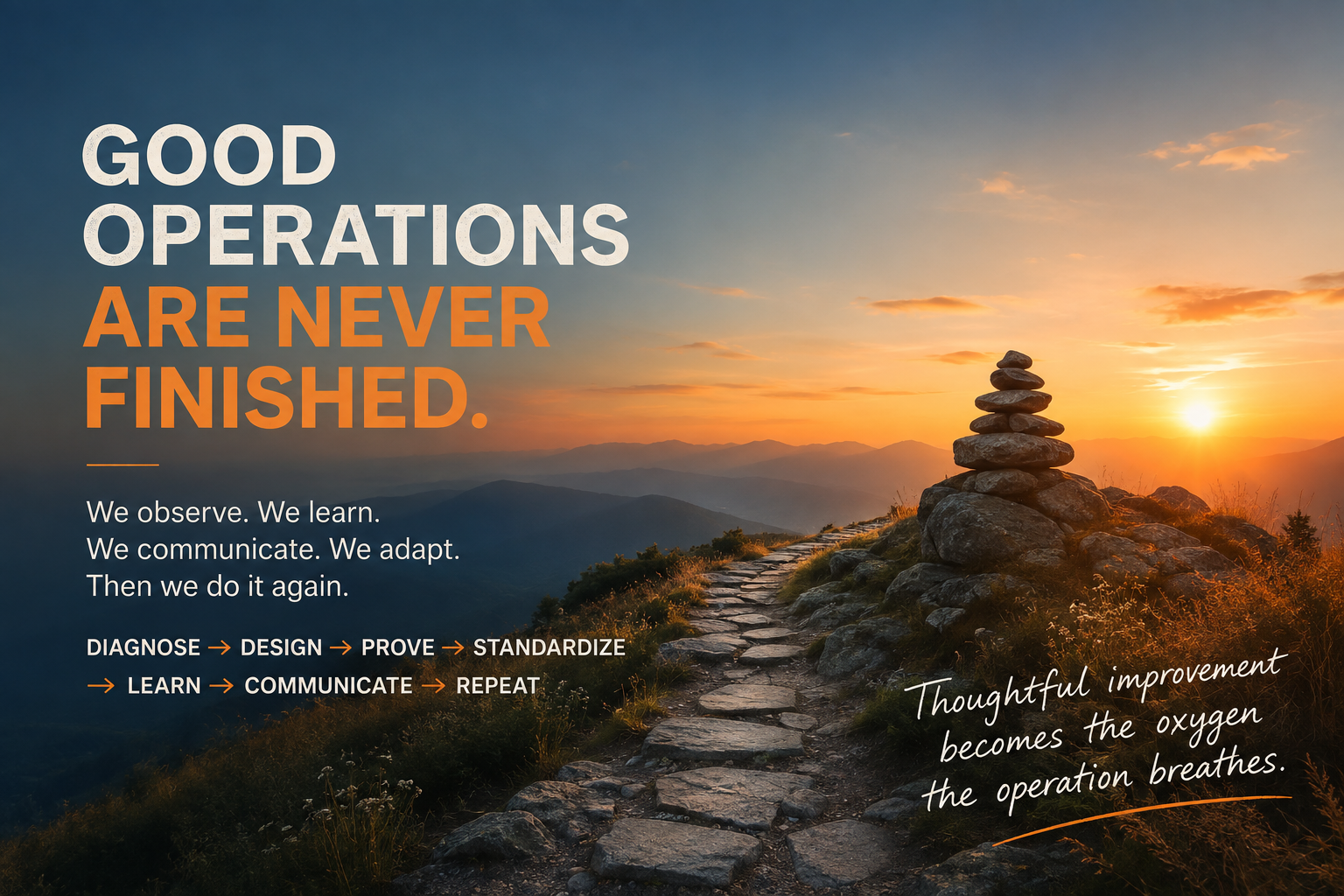
Good Operations Are Never Finished
A standardized process is not the end of improvement. It is the beginning of a new opportunity to learn.
Once people begin using the process, the operation starts teaching us.
Diagnose → Design → Prove → Standardize → Learn → Communicate → Repeat
The operating system is alive.
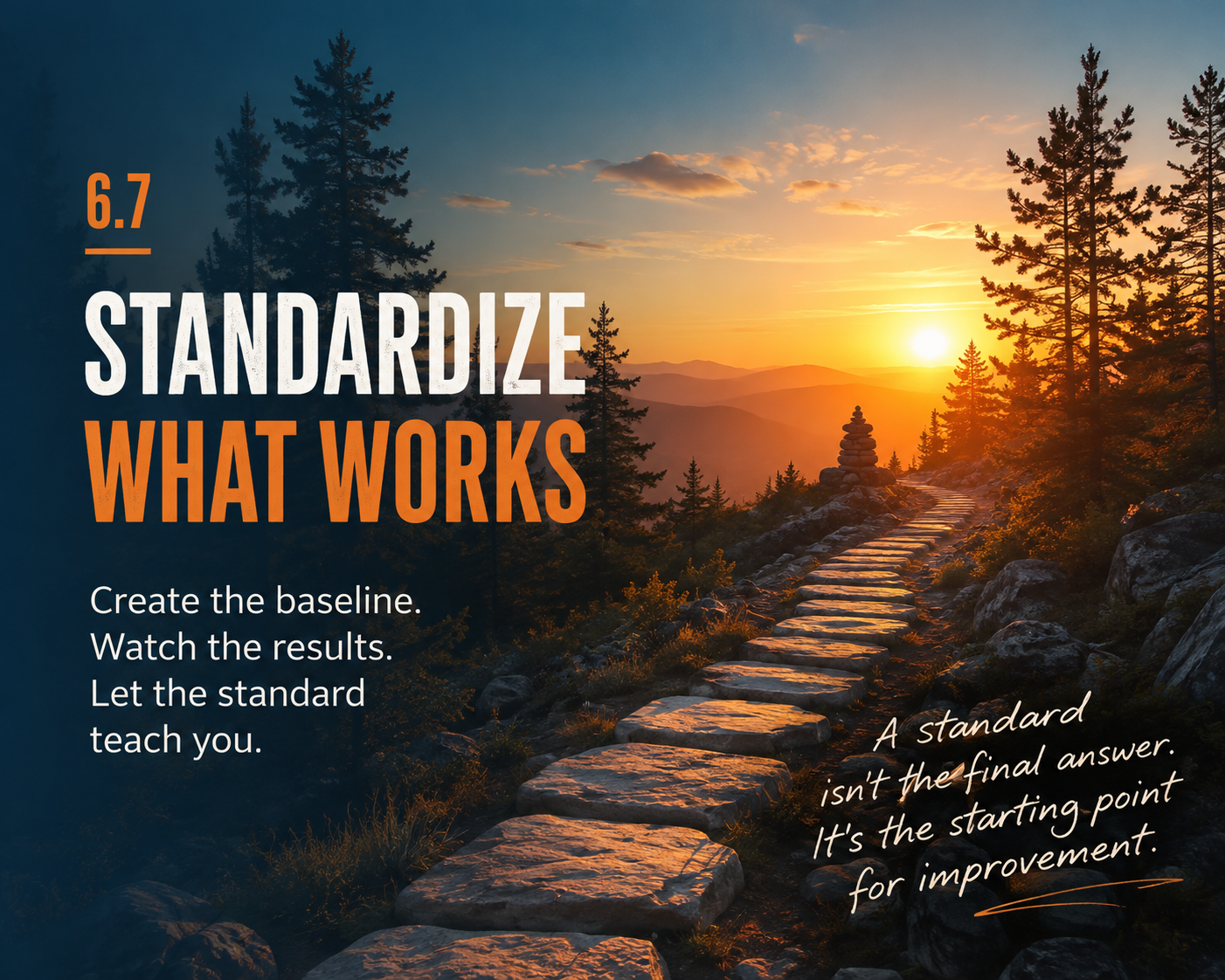
Standardize What Works
A standard should do more than tell people how to perform a task. It should give leaders a baseline, create visibility, and provide leverage across the operation. When performance changes, the standard can help us see the change and ask the right question: What changed?
Standardize what works. Then let the standard teach you what comes next.
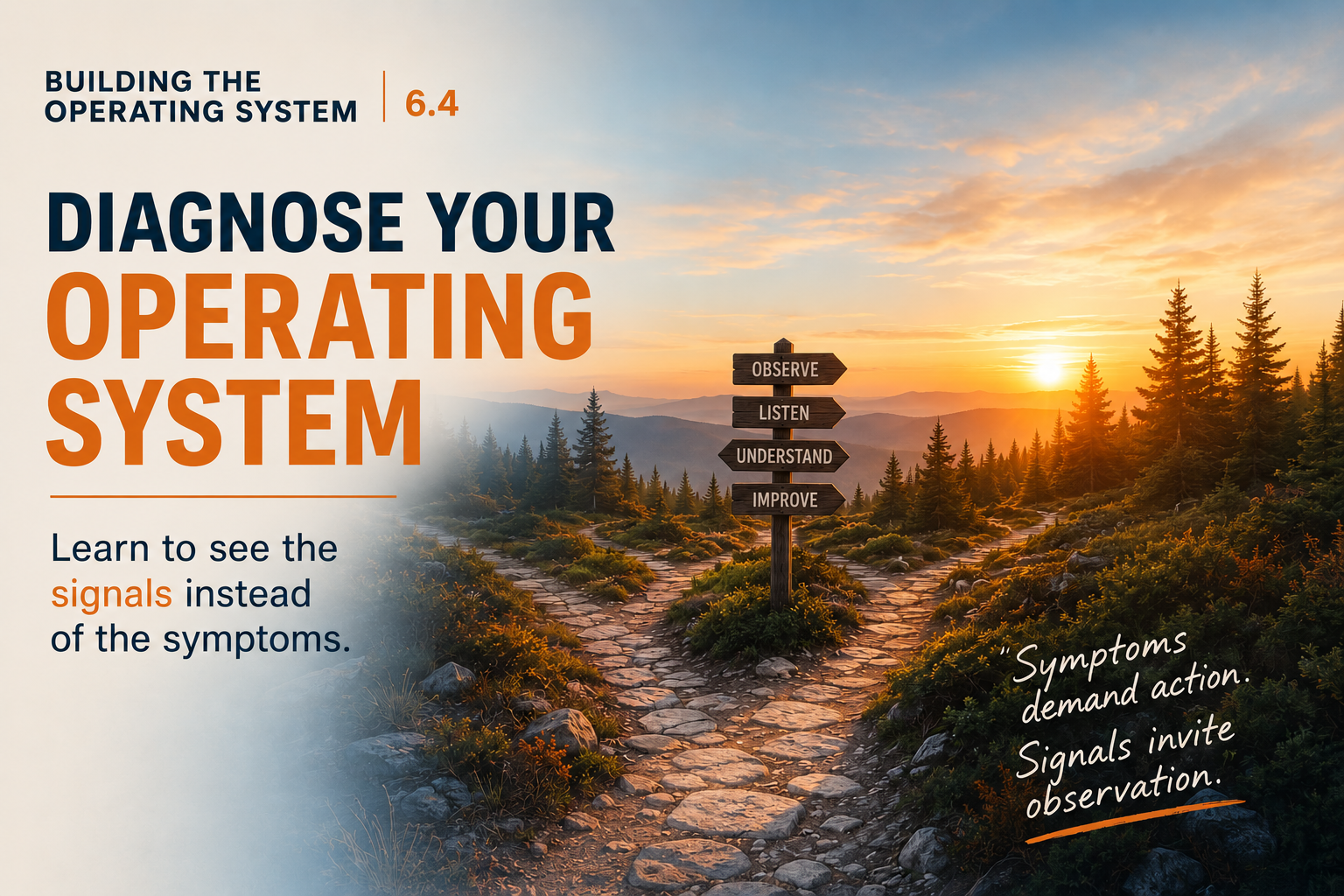
Learn to See the Signals Instead of the Symptoms
Most organizations react to symptoms. Great operational leaders learn to recognize the signals first. The next time something doesn't feel right, ask yourself: What is the operating system trying to tell me?
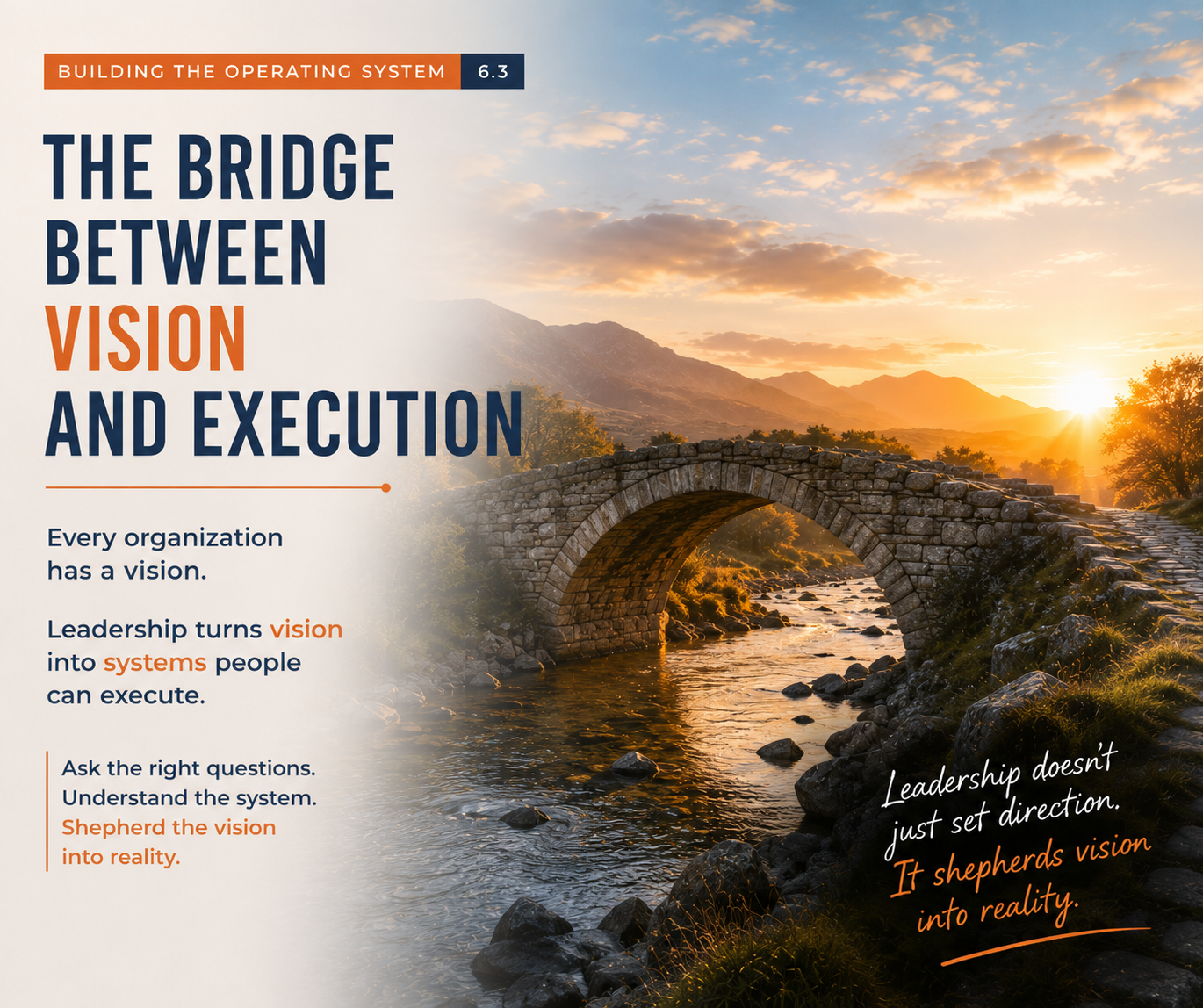
The Bridge Between Vision and Execution
Every organization has a vision. The challenge isn't creating it. It's turning that vision into operational reality.
Leadership doesn't end when the vision is announced. It begins by asking the questions that protect it through execution.
In the latest Building the Operating System article, I explore the bridge between vision and execution.
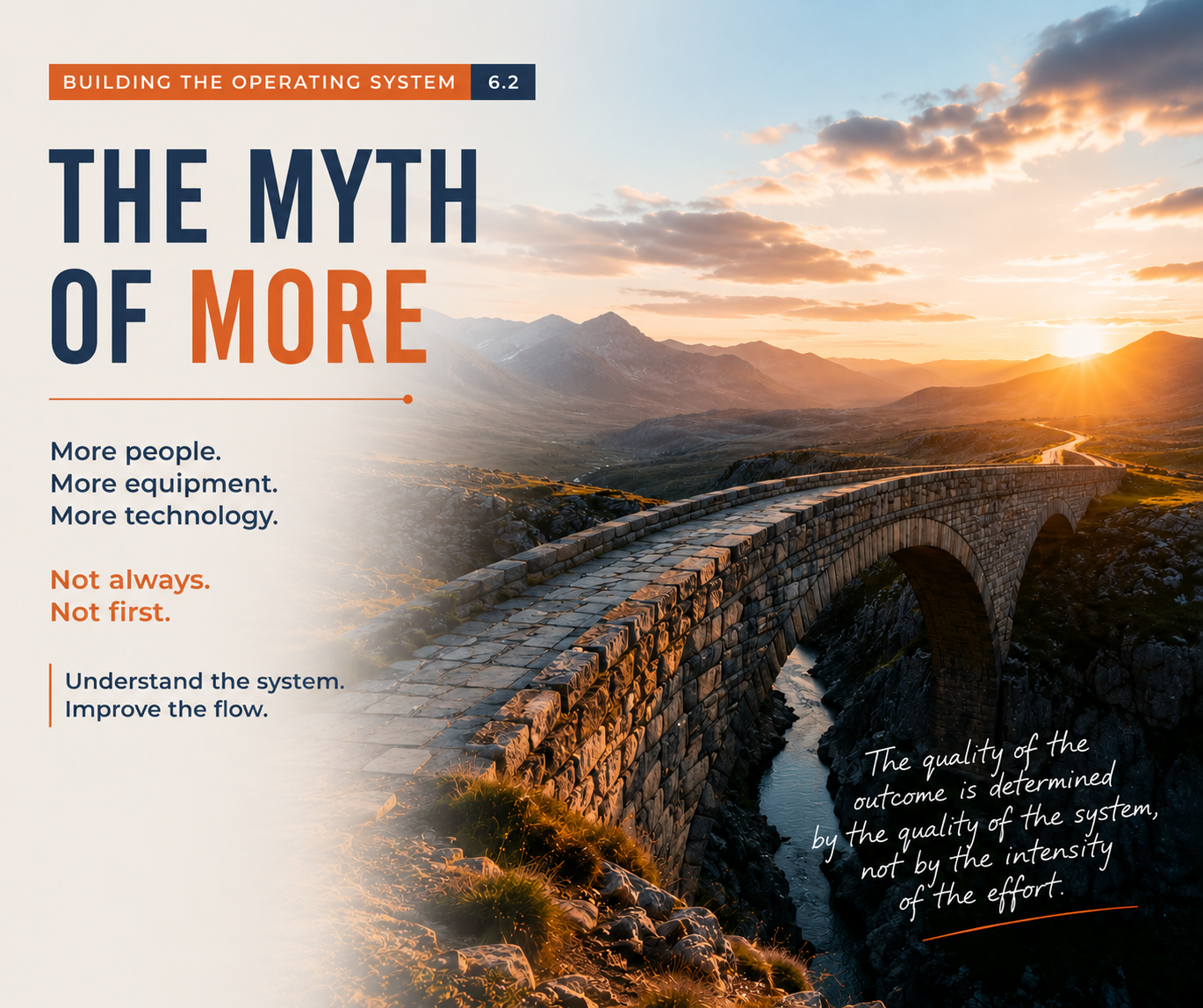
The Myth of More
Leaders often solve operational problems by adding more people or technology. Learn why understanding system flow leads to better, lasting results.
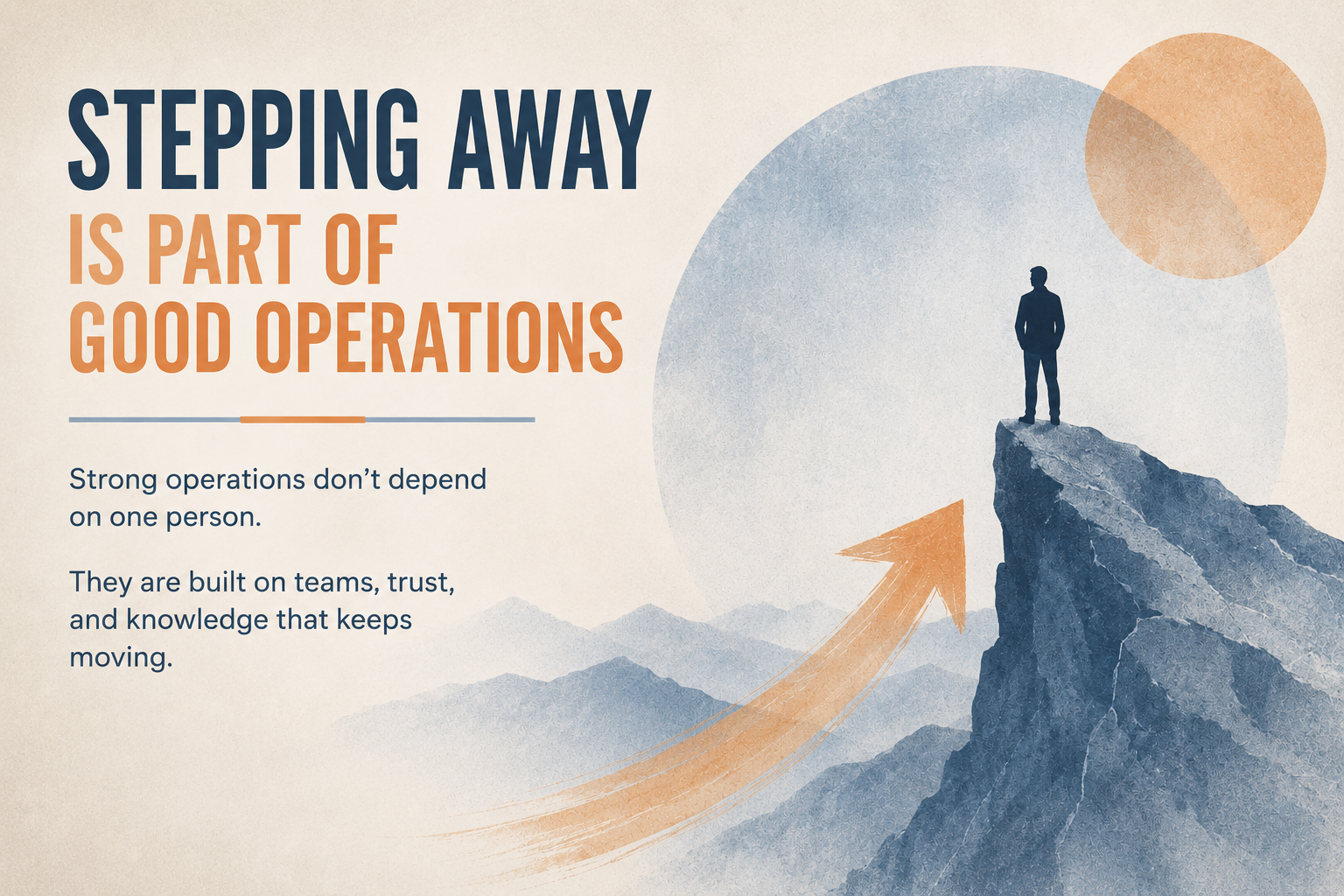
Stepping Away Is Part of Good Operations
Every organization has people who seem indispensable. But is that a sign of strength... or a hidden risk? Here's why stepping away is actually part of good operations.
After Go-Live: The Real Work Begins
After go-live, the real work begins. The excitement fades, pressure returns, and old habits re-emerge. But stabilization is not the end—it is the beginning of sustainable adoption. Leadership must believe in the new system, stay the course, and refine the edges. That is where lasting progress happens.